Amy Carmichael: She Never Came Home
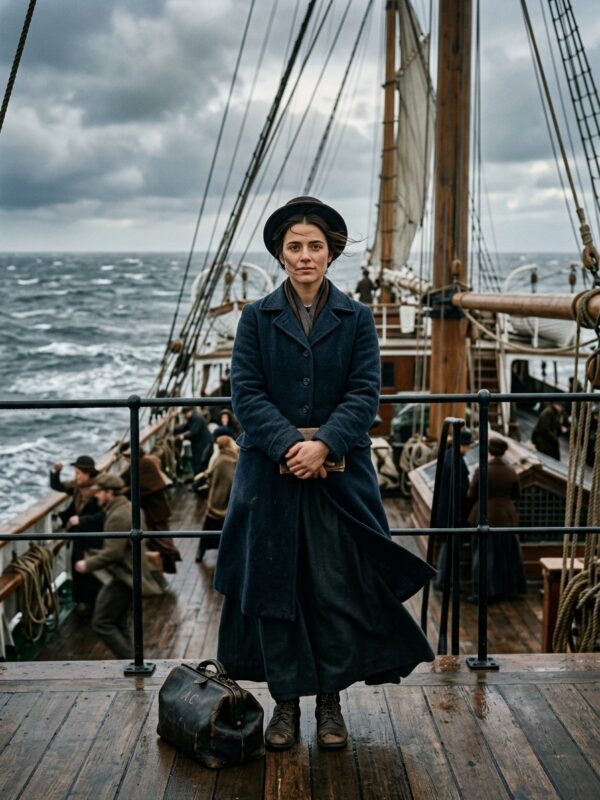
When Amy Carmichael sailed for India in 1895, she was thirty-two years old and in poor health. Doctors had warned her that the tropics would likely kill her. Her friends urged her to reconsider.
She went anyway.
Amy was born in 1867 in a small village in Northern Ireland, the oldest of seven children in a devout Presbyterian family. From her earliest years she had a heart for people on the margins. As a teenager in Belfast, she started a Sunday morning ministry for the mill girls – young women who worked in the factories six days a week and spent their one day off wandering the streets because no church would let them in without a hat.
When she arrived in India, she was placed in the city of Bangalore, then moved to various regions, trying to find where God was calling her to settle. She found her answer not in a city but in a rumour.
She began to hear stories about devadasi – young girls, some barely old enough to walk, who were being dedicated to Hindu temples and used as ritual prostitutes. The practice was ancient, deeply embedded in Indian culture, and completely ignored by the outside world. Amy could not ignore it.
In 1901 a seven-year-old girl named Preena escaped from a temple and found her way to Amy Carmichael. She was the first. She was not the last.
What Amy built in response to Preena’s arrival was the Dohnavur Fellowship – a community in the Tamil Nadu region of South India that became a refuge for hundreds of children rescued from temple slavery. She learned the Tamil language. She wore Indian dress. She dyed her skin with coffee to blend in when she went into villages to find the children. She fought Indian cultural tradition, British colonial indifference, and the hostility of the temple authorities, and she did it mostly alone.
And she never went home.
For 55 years, Amy Carmichael lived in India without a furlough. Not one trip back to England or Ireland. Not one rest at home. The children at Dohnavur were her home. The community she built around them was her family.
In 1931, at the age of 63, she fell into a pit that had been dug for building work at the compound and shattered her leg, her hip, and her spine. She spent the last 20 years of her life in bed. She did not stop working. She wrote 35 books from that bed. She continued to run the Fellowship, to pray for her children, to mentor the staff who carried on the work.
She died in 1951 at the age of 83. She had asked to be buried with no stone marker, just a bird bath. The children who had grown up at Dohnavur placed a bird bath on the grave, as she had asked, and carved into it one word: Amma. Tamil for mother.
She never had children of her own. She was mother to hundreds. She never came home. She never needed to. She was already there.