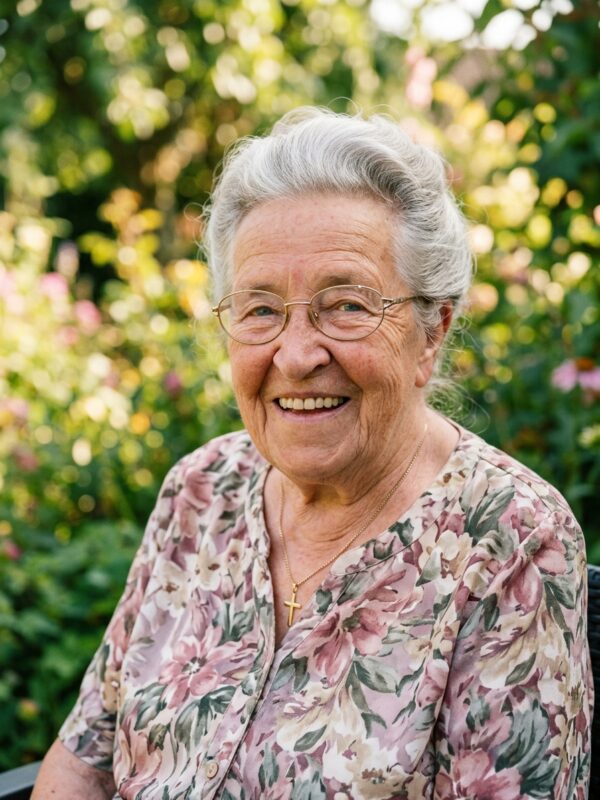
Corrie ten Boom: The Hiding Place
Corrie ten Boom was 50 years old when the Nazis marched into Holland, and she had lived the kind of quiet, ordinary life that does not make news. She helped her father in his watchmaking shop in Haarlem. She taught Sunday school. She worked with disabled children. She was not a heroic person by anyone’s measure, including her own.
Then the Jewish families started disappearing, and Corrie could not look away.
The ten Boom family began hiding Jewish refugees in their home in 1942. They built a secret room behind a false wall in Corrie’s bedroom – just large enough to hold six people – and they made their house a stop on an underground network that was trying to get Jewish men, women, and children out of reach of the Gestapo.
For two years they lived with the constant reality that any day could be the day someone knocked on the door.
On February 28, 1944, someone did.
The Gestapo arrested the entire ten Boom family. The six people hidden behind the false wall stayed there undiscovered for over 47 hours before they were found by others and helped to safety. But Corrie, her sister Betsie, and their father Casper were taken away.
Their father died in prison ten days later, at the age of 84.
Corrie and Betsie were sent to Ravensbrück, the women’s concentration camp in Germany. What Betsie held onto through that experience, what she said to Corrie night after night in the barracks, is one of the most remarkable things in the record of Christian faith. There is no pit so deep, she told her sister, that God’s love is not deeper still. She said it in the middle of Ravensbrück. She believed it completely.
Betsie died in Ravensbrück in December 1944. Corrie was released on December 28, 1944, due to a clerical error. A week after her release, all the women her age at Ravensbrück were sent to the gas chambers.
Corrie spent the next 33 years travelling the world and telling the story. She spoke in over 60 countries. She wrote The Hiding Place, which has sold millions of copies. She started rehabilitation homes for concentration camp survivors.
And then one day, in Munich in 1947, she was speaking at a church meeting, and a man came forward after the service with his hand outstretched. She recognized him immediately. He had been one of the guards at Ravensbrück.
He told her he had become a Christian since the war. He asked for her forgiveness.
Corrie ten Boom later wrote that it took everything she had to raise her hand and take his. She prayed silently, desperately, for the ability to forgive. And then, she wrote, a warmth flooded through her that she had not expected. She shook his hand. She forgave him.
She did not do it because she felt like it. She did it because she had learned, in Ravensbrück, that forgiveness is not a feeling. It is a choice you make, and then God supplies what the choice requires.
She died on April 15, 1983. She was 91 years old. It was her birthday.
She survived the worst humanity could do to her. And what she carried out of it was not bitterness. It was a message she could not stop telling.