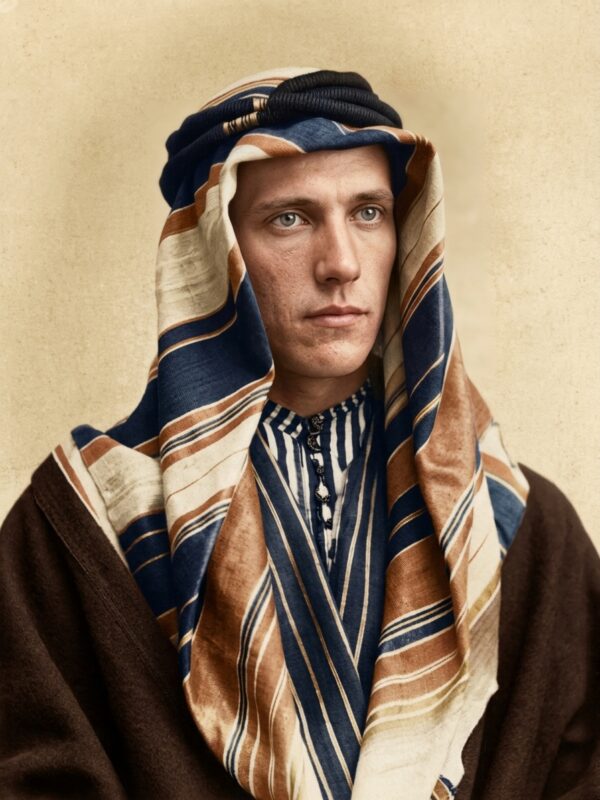
Samuel Zwemer: The Apostle to Islam
When Samuel Zwemer walked into the offices of the Reformed Board of Missions in 1888 and told them he believed God was calling him to be a missionary to Muslims in Arabia, they told him the idea was impractical.
They were not entirely wrong. Arabia in the 1880s was one of the most closed, hostile, and dangerous places on earth for a Christian missionary. No sustained Protestant mission had ever been established there. The theological climate made conversion from Islam a social death sentence and, in many cases, a literal one. The heat was extreme, the diseases were numerous, and the likelihood of any visible fruit was, by any human calculation, almost zero.
Zwemer was 21 years old. He thanked the board and left their offices. Then he and his seminary classmate James Cantine sat down and simply started their own mission, each one raising support for the other until they had enough for both to sail.
Samuel Marinus Zwemer was born on April 12, 1867, in Vriesland, Michigan, the thirteenth of fifteen children of a Dutch Reformed pastor. He had grown up in a home saturated with Scripture and missionary vision. He arrived at seminary already convinced that the Muslim world was the most neglected mission field on the face of the earth.
In June 1890, at age 23, Zwemer left for Arabia. He would not return for years at a time.
He set up his base on the island of Bahrain in the Persian Gulf. He distributed Arabic Scriptures in markets. He preached wherever anyone would listen. He engaged Muslim scholars in conversation and argument. He married Amy Wilkes, an Australian missionary nurse, in 1896, and she became his companion and co-worker in the most difficult corners of the field.
Then came July 1904.
Both of their daughters fell ill with dysentery within days of each other. Ruth was four years old. Katharina was seven. They died within a week of each other.
The grief alone would have broken most people. But what happened next added an almost unbearable weight to it. Local authorities refused to allow Zwemer to bury his daughters, saying the soil would be contaminated by the bodies of non-Muslim pagans.
He dug the tiny graves himself.
On the stone above them he had inscribed: Worthy is the Lamb that was slain to receive riches.
His brother Peter had died in Arabia in 1898. Now his daughters. He had already given what most people would call more than enough.
He stayed.
He spent 38 years in the field. He wrote over 50 books on Islam and the missionary challenge of the Muslim world. He founded and edited the journal The Muslim World for 36 years. He spoke at missions conferences across America, Britain, Europe, and Asia, inspiring hundreds of young men and women to pursue the unreached. He was the keynote speaker at the first Urbana student missions conference. Even in his final years, too ill to attend Urbana 1951, he sent a telegram that ended: Doors once closed are nailed open. Now is the time for advance.
Samuel Zwemer died on April 2, 1952, in New York City, at age 84. The greatest mission historian of the 20th century, Kenneth Scott Latourette, wrote that no one through all the centuries of Christian missions to Muslims had deserved better the designation Apostle to Islam.
Fifty years after burying his daughters in Arabian soil, someone asked Zwemer about those early years of suffering and loss and near-invisible fruit. He said: The sheer joy of it all comes back. Gladly would I do it all over again.
He meant it.
He planted in soil that looked like rock. He never stopped. The seeds he pressed into the ground are still breaking open, long after he was gone.