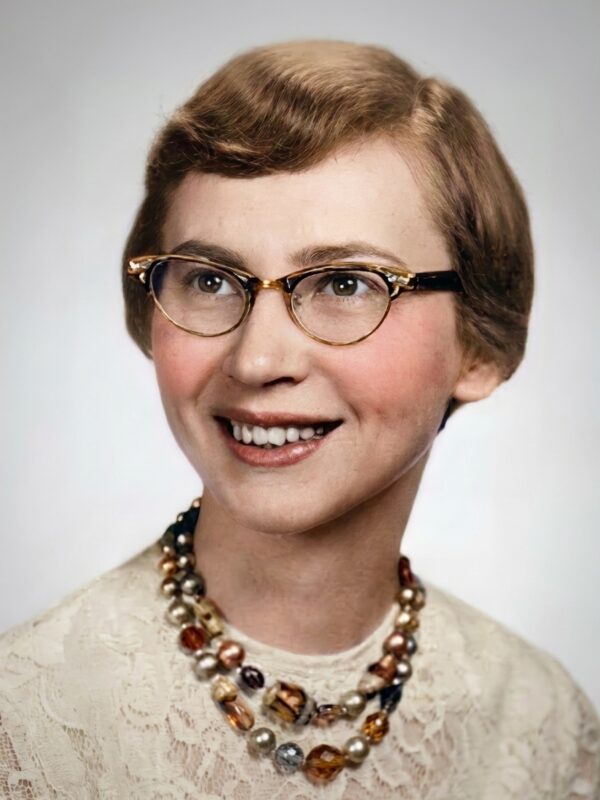
Betty Olsen: She Never Showed Bitterness
Most people have never heard of Betty Olsen. That is exactly the problem.
Betty Ann Olsen was born in 1934 in Bouake, Ivory Coast, to American missionary parents. She grew up on the mission field, trained as a nurse, and graduated from Nyack Missionary College. She went through a season of serious spiritual doubt – her journals from that period record frustration and emptiness. If this is all there is to the Christian life, then what is it all for? She was honest about her struggle. Then God met her in it. Her calling was renewed. She applied to the Christian and Missionary Alliance in 1963 and was assigned to Vietnam in 1964.
The Vietnam War was escalating. People around her urged her not to go. She went anyway. She said her place was with the people who needed her. She nursed patients at a leprosy clinic in Ban Me Thuot in the Central Highlands of South Vietnam, working with some of the most marginalized people in a country already at war with itself.
She had been there for four years when the Tet Offensive came.
On January 31, 1968, Viet Cong forces launched coordinated attacks across Vietnam. The missionary compound at Ban Me Thuot was hit. Eight of the thirteen missionaries were killed or died in captivity. On February 1, Betty Olsen was captured along with Henry Blood, a missionary translator, and Michael Benge, an American aid worker.
What followed were eight months of forced marches through the jungle, beatings, starvation rations, and no medical care.
Michael Benge later spent years telling Betty’s story to anyone who would listen. He said she never showed any bitterness or resentment toward their captors. When Benge contracted cerebral malaria and nearly died, Betty nursed him with whatever she could find. When Henry Blood died in captivity, Betty conducted his graveside service in the jungle. She had no medicine. She had no resources. She kept giving what she had.
She was a nurse in a jungle prison with nothing to nurse with. So she nursed the people beside her with presence, with prayer, with whatever fragments of care were still possible. She prayed for the soldiers who were killing her. She spoke to them with the same patience she had given to her leprosy patients. She did not perform forgiveness. She lived it.
By September 1968, she was too weak to continue. She died on September 26, 1968, in Dak Lak Province, Vietnam. She was 33 years old. Michael Benge buried her somewhere along the Ho Chi Minh Trail.
He came home in 1973, after five years in captivity, and spent the rest of his life making sure people knew her name. The Vietnamese government posthumously awarded her a citation for Heroic Medical Work. Most of the world has never heard of her.
She had doubted her calling. She had wrestled with God. She had gone to a war zone to nurse people others had abandoned. She had been captured, marched through the jungle, and died in an unmarked grave. And the one person who watched all of it said: I have never seen anything like her.
She went to Vietnam with a nurse’s kit and a Bible. They took everything from her except what she was. And what she was, was enough.