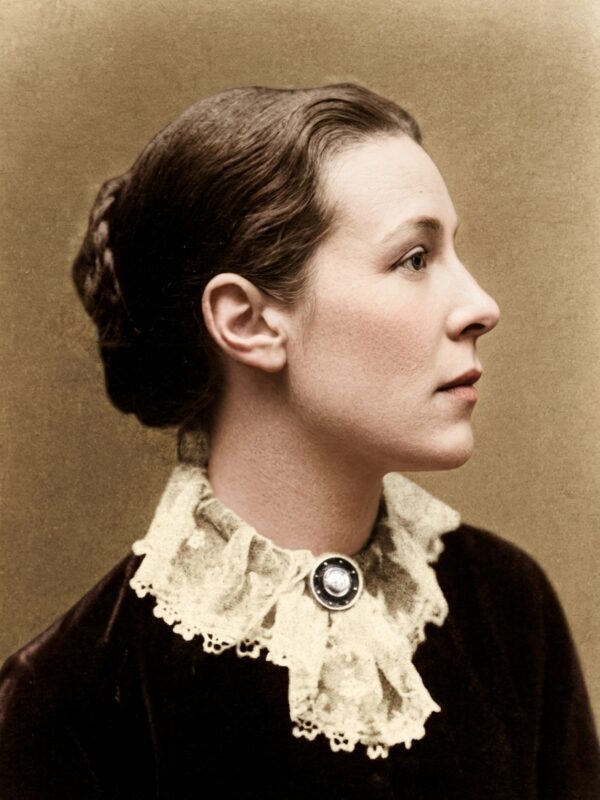
Lilias Trotter: She Chose a Different Kind of Immortality
John Ruskin told her she would produce work that would be immortal.
He was the most influential art critic in Victorian England. When he said something would last, people believed him. And he was dazzled by the watercolors of Lilias Trotter. He had been mentoring her for years. He had taken her on sketching expeditions. He had written about her gifts in his published essays. If he launched her career, it would be launched.
Isabella Lilias Trotter was born in 1853 into a wealthy London family. Her mother had engineered the meeting with Ruskin during a stay in Venice, sending him some of Lilias’s watercolors. Ruskin’s response was immediate: he recognized something rare. He guided her, challenged her, invested in her. He believed she could be the greatest living painter in England. He could have made it happen.
In May 1887, at a foreign missions meeting, Lilias heard a challenge to take the gospel to North Africa. She stood up and said: He is calling me.
The art world fell away in that moment. Not easily, not painlessly – she prayed it through for months. She wrote in her journal: I see clearly that I cannot dedicate myself to painting and at the same time seek first the Kingdom of God. The choice was made. She applied to the North African Mission. They turned her down. She had long-term health problems from a failed operation and could not pass their health examination.
She used her own money. She found two other women. They arrived in Algiers in March 1888.
The field was brutal. Algeria was one of the harshest mission environments in the world. Muslim culture in North Africa was deeply closed to both women and to the gospel. Lilias could not simply walk up to Algerian women and speak to them. So she befriended their children first. The mothers followed the children. She learned the language. She produced illustrated devotional booklets designed for a Muslim audience. She wore local clothing. She entered the culture instead of standing outside it and calling people out of it.
She never stopped painting. Every day in Algeria she made watercolors – the desert, the markets, the faces of the people she loved. What Ruskin wanted her art to become was grand and formal and celebrated. What Algeria produced was intimate, honest, and alive. Art historians have since described her Algerian watercolors as extraordinary. She never exhibited them. She used them to illustrate the gospel materials she wrote for the people she was trying to reach.
By 1920, the Algiers Mission Band she had built had 30 full-time workers and 15 preaching stations across North Africa. At her death in 1928, she had established 13 missions and had spent 40 years pioneering an approach to Muslim-context evangelism that would influence the entire field.
She was 74 when she died. Still in Algeria. Still working.
Ruskin once said that giving up painting for Algeria was the greatest waste of talent he had ever witnessed. He meant it as a rebuke. She received it as a compliment.
She had chosen a different kind of immortality. Forty years later, near death, she had no regrets.
She left behind the world that would have remembered her name and went to the world that needed her. She found, in the end, that she had not lost anything worth keeping.